
 Send Inquiry
 Call Us : +905524799947

 Get A Quote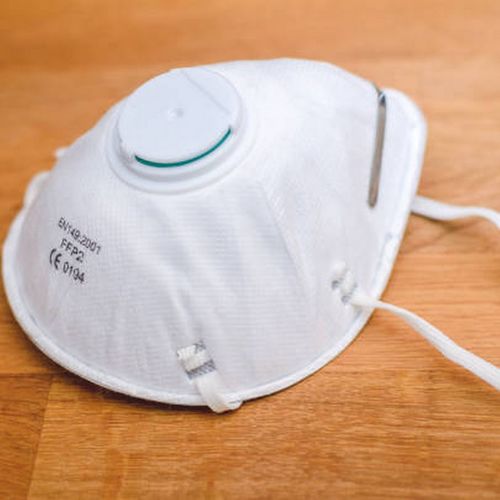
Buy Face Masks | N95 / FFP2 / FFP3
Product Details:
- Handle Type Earloop / Headband
- Automation Grade Manual
- Usage & Applications Hospitals, Laboratories, Construction Sites, Public Spaces
- Shelf Life 3 Years
- Weight 15-25 gm each
- Fragrance Odorless
- Size Standard Adult, Adjustable
- Click to view more
X
Buy Face Masks | N95 / FFP2 / FFP3 Product Specifications
- Single Use
- 3 Years
- 15-25 gm each
- Hospitals, Laboratories, Construction Sites, Public Spaces
- Personal Protection, Healthcare, Industrial Safety
- Air Filtration, Dust and Virus Protection
- Manual
- Earloop / Headband
- White / Grey / Blue
- Non-woven Fabric, Melt Blown Filter
- Ultrasonic Sealing
- Standard Adult, Adjustable
- N95 / FFP2 / FFP3 Face Mask
- 17.5 cm x 9.5 cm (approx.)
- Odorless
- No (Disposable)
- High
- Individual Poly Pack
- Soft Inner Lining, Adjustable Nose Clip
- 3 to 5 Layers
- Yes
- Yes
- >95% (N95), >94% (FFP2), >99% (FFP3)
Buy Face Masks | N95 / FFP2 / FFP3 Trade Information
- Cash Against Delivery (CAD), Cash on Delivery (COD), Days after Acceptance (DA), Delivery Point (DP), Cash in Advance (CID), Cash Advance (CA)
- standard
- Asia, Australia, Western Europe, Central America, South America
- All India
- CE
Product Description
Lightweight, disposable, valved FFP3 respirator.
PHE and experts from HSE currently advise the use of FFP3 respirators when caring for patients in areas where high risk aerosol generating procedures (AGPs) are being performed.
FFP3 respirators are manufactured to the EU standard (EN149:2001+A1:2009).
FFP3 respirators have a minimum filtration percentage of 99% and maximum 2% leakage to the inside.
Protects against mechanically generated coarse health hazardous dry and liquid air-bourne particles. Captures fine metal or wood dusts, quartz dust, pollens, and liquid mists.
No staple used. Avoids contact between skin and metal; suitable for those environments where metal is not allowed.
Super fold flat design, 3D structure and large filtration area. P.P. inner/outer layers provide smooth lining and comfortable feel.
Latex-free head straps and inserted nose clip.
Advanced Filtration Efficiency
Each mask is engineered to provide superior filtration, with N95, FFP2, and FFP3 masks delivering over 95%, 94%, and 99% efficiency, respectively. The multi-layer design and melt-blown filter effectively block dust, viruses, and airborne particles for optimal safety in various settings including hospitals, laboratories, and construction sites.
Comfort and Fit for All-Day Use
Experience enhanced comfort thanks to the soft inner lining, adjustable nose clip, and high breathability. The latex-free, hypoallergenic material ensures users with sensitive skin can wear these masks for extended periods. Choose between earloop or headband options in white, grey, or blue for a tailored fit.
Reliable Disposable Protection
Designed for single use, these disposable masks prioritize safety and hygiene. Each mask is individually poly-packed to prevent contamination, and their lightweight build (15-25g) ensures easy handling. The masks have a shelf life of three years and are suitable for a wide range of environments requiring strict protective standards.
FAQ's of Buy Face Masks | N95 / FFP2 / FFP3:
Q: How do I properly wear these N95, FFP2, or FFP3 face masks?
A: Position the mask over your nose and mouth, securing it with the earloops or headband. Adjust the nose clip to fit snugly against your nose. Ensure the mask covers both your nose and chin, then check for a secure, comfortable seal before entering any high-risk area.Q: What distinguishes N95, FFP2, and FFP3 masks in terms of filtration efficiency?
A: N95 masks filter out more than 95% of airborne particles, FFP2 masks exceed 94%, and FFP3 masks offer over 99% filtration efficiency. The different grades cater to varying protection needs, with FFP3 providing the highest level of filtration for hazardous environments.Q: When should I replace or discard a disposable face mask?
A: These masks are designed for single use. Replace or discard the mask after each session, exposure, or if it becomes damp, soiled, or difficult to breathe through, to maintain optimal protection and hygiene.Q: Where can these masks be used effectively?
A: These disposable masks are suitable for personal protection in hospitals, laboratories, industrial settings like construction sites, and public spaces. They meet the needs of healthcare workers, industry professionals, and everyday users seeking reliable respiratory protection.Q: What is the process of manufacturing these masks to ensure quality?
A: The masks are manufactured using a manual automation grade with an ultrasonic sealing technique. Made from non-woven fabric and a melt-blown filter, each is individually poly-packed to maintain sterility and durability-meeting the rigorous standards required for protective equipment.Q: How does the soft inner lining benefit users with sensitive skin?
A: The hypoallergenic, latex-free soft inner lining minimizes irritation and discomfort, making these masks suitable for prolonged use by individuals with sensitive skin or allergies.Q: What are the advantages of individually packed disposable masks?
A: Individual poly pack packaging prevents contamination before use, ensures portability, and enables hygienic distribution in healthcare, workplace, or public settings.Tell us about your requirement

Price:
Quantity
Select Unit
- 50
- 100
- 200
- 250
- 500
- 1000+
Additional detail
Mobile number
Email

Other Products in 'Hospital & Medical Supplies' category

Contact Us

- Kurtulus Meydani Inonu Bulvari No. 70, Klas Plaza A Blok, Kat 13 D.24-26,Mersin - 33940, Icel, Turkey
ABBAY TRADING GROUP, CO LTD

- Mr. Chris Jones (Sales Manager/Sales)
- Mobile : +905524799947
- abbaytradings2015@gmail.com
- Mr. Chris Jones (Sales Manager/Sales)
Whatsapp +90 552 479 9947
Video
 Send Inquiry
ABBAY TRADING GROUP
All Rights Reserved.(Terms of Use)
Developed and Managed by Infocom Network Private Limited.
Developed and Managed by Infocom Network Private Limited.

